
Back Pain After a South Carolina Car Accident: When Should You Be Concerned?
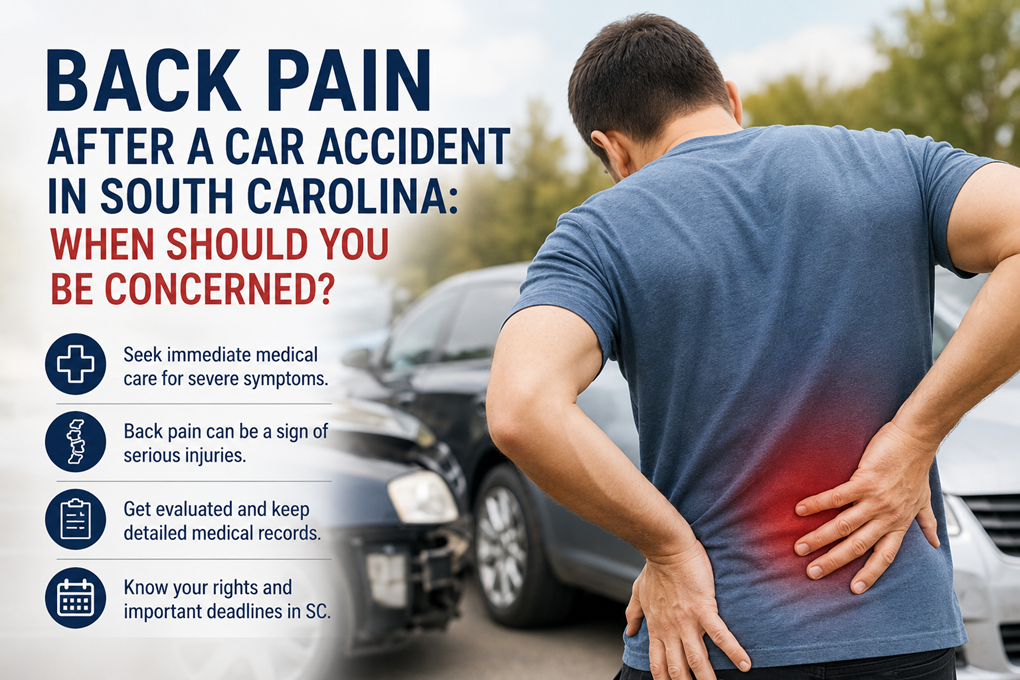
Back pain is one of the most common complaints people experience after a collision.
It may begin at the accident scene, several hours later, or even in the days that follow.
While some soreness may result from strained muscles, back pain can also indicate an injury involving a disc, nerve, vertebra, or the spinal cord.
Because you cannot always determine the seriousness of an injury based on pain alone, you should not ignore back pain after a car accident in SC.
Knowing which symptoms require urgent care—and what steps to take afterward—can help protect both your health and your legal rights.
Our South Carolina car accident injury guide explains other common injuries, delayed symptoms, diagnostic testing, medical documentation, and the factors that may affect an injury claim.
Why Back Pain May Be Delayed After a Car Accident
A collision places sudden force on the body. Your seat belt may hold your torso in place while your head, neck, and spine move rapidly.
Even a crash that causes limited vehicle damage can place significant stress on muscles, ligaments, joints, and discs.
Immediately after the accident, adrenaline and stress may make it difficult to recognize pain.
According to the Cleveland Clinic, adrenaline can temporarily mask injury symptoms. Inflammation and muscle stiffness can also develop gradually.
As a result, you might feel relatively normal at the scene but wake up the next morning with pain, reduced mobility, or muscle spasms.
Delayed pain does not automatically mean that the injury is severe. However, it is still worth discussing with a healthcare provider. You can also read more about delayed car accident injury symptoms in South Carolina.
Common Causes of Back Pain After a Collision
Back pain following an accident may come from several different injuries, including:
Muscle and Ligament Strains
Soft-tissue injuries occur when muscles, tendons, or ligaments are stretched or torn.
They may cause stiffness, tenderness, swelling, spasms, and pain that becomes worse with movement.
The American Academy of Orthopedic Surgeons provides additional information about these types of injuries.
Herniated or Bulging Discs
Discs act as cushions between the vertebrae. A crash may cause a disc to shift, bulge, or rupture.
When the damaged disc presses against a nerve, pain can travel into the buttocks, legs, shoulders, or arms.
Learn more from the National Institute of Neurological Disorders and Stroke.
Nerve Injuries
A compressed or irritated nerve may cause burning pain, tingling, numbness, or weakness.
Pain that travels down one leg is sometimes associated with irritation of the sciatic nerve.
The Mayo Clinic explains how nerve compression can affect mobility and sensation.
Vertebral Fractures
The force of an accident can fracture one or more vertebrae.
Fractures may be more likely after a high-speed collision, rollover, or direct impact, but they can also affect people with osteoporosis or other conditions that weaken the bones.
The National Library of Medicine offers more details about spinal fractures.
Spinal Cord Injuries
Spinal cord trauma is a medical emergency. Symptoms may include severe pain or pressure, weakness, loss of coordination, numbness, difficulty walking, breathing problems, or loss of bladder or bowel control.
When Is Back Pain After a Car Accident an Emergency?
The safest approach is to seek prompt medical attention for back pain that begins after a crash.
Call 911 or go to an emergency department when the pain is severe or when it occurs with any of the following symptoms:
- New numbness, tingling, or loss of sensation
- Weakness in an arm or leg
- Difficulty standing, walking, or maintaining balance
- Loss of bladder or bowel control
- Numbness around the groin or inner thighs
- Trouble breathing
- Severe neck, head, or back pressure
- A visibly twisted neck or back
- Fever accompanying the pain
- Abdominal pain or throbbing
- Loss of consciousness, confusion, or worsening headache
Medical guidance recommends emergency evaluation when back pain follows trauma such as a car crash, particularly when neurological or bladder symptoms are present.
You can review emergency warning signs from the Centers for Disease Control and Prevention (CDC).
Do not attempt to drive yourself if you are experiencing weakness, dizziness, severe pain, or difficulty controlling your movements. Avoid unnecessary movement when a spinal injury may be involved.
What If the Pain Seems Mild?
Mild pain can still justify a medical evaluation.
A healthcare provider can examine your range of motion, reflexes, strength, and sensation.
Depending on your symptoms, the provider may recommend imaging or follow-up care.
Until you receive medical advice, avoid strenuous exercise, heavy lifting, or any activity that noticeably increases the pain.
Do not assume that “pushing through” the discomfort will make it disappear.
It is also important to follow the treatment plan you receive.
Attend follow-up appointments, take medication as directed, and tell your provider if symptoms change.
A consistent medical history helps your provider understand whether you are improving or need additional evaluation.
Why Medical Documentation Matters to an Injury Claim
Medical records can help connect your condition to the collision. They may document:
- When your symptoms began
- The location and severity of your pain
- Your diagnosis and test results
- Treatment recommendations
- Work or activity restrictions
- Whether your condition is improving
- Expected future care
Waiting a long time to obtain treatment may make it more difficult to show that your back condition was caused or aggravated by the crash.
An insurance company may argue that the injury was unrelated, that another event caused it, or that the condition was not serious enough to require care.
Having a preexisting back condition does not necessarily prevent a claim.
An accident may aggravate an earlier injury or make a previously manageable condition more painful.
The key question is often how the collision changed your health and daily activities.
For additional guidance about the immediate aftermath of a wreck, review what to do after a car accident in South Carolina.
Steps to Take After Seeking Medical Care
Keep copies of medical bills, discharge instructions, prescriptions, and work notes. You should also keep a simple daily record of your symptoms.
Note whether the pain interferes with sleeping, driving, working, household tasks, exercise, or caring for family members.
Save photographs of the vehicles and accident scene, along with the incident report, witness information, repair estimates, and communications from insurance companies.
Avoid posting details about your recovery on social media because those posts may later be reviewed out of context.
Before accepting a settlement, consider whether your condition has been fully evaluated.
Once a claim is settled and a release is signed, you generally cannot return to request additional payment because your symptoms worsened or you later needed more treatment.
How Long Do You Have to Bring a South Carolina Claim?
South Carolina law generally provides a three-year limitations period for an action involving injury to a person.
The way a deadline applies can depend on the facts, the identity of the responsible party, and other legal issues.
Claims involving government entities may be subject to different requirements and shorter practical timelines. See South Carolina Code Section 15-3-530 and Section 15-3-535 for the statutory language.
You should not use the general three-year period as a reason to postpone medical or legal action.
Evidence may disappear, witnesses may become difficult to locate, and important insurance deadlines may arise much sooner.
Speak With a South Carolina Car Accident Attorney
Back pain can affect your ability to work, sleep, drive, and enjoy normal activities.
If another driver caused the crash, you may have questions about medical expenses, lost income, insurance coverage, and the value of your losses.
An attorney can review the circumstances, gather available evidence, communicate with insurers, and explain the options that may apply to your situation.
No particular outcome can be promised, and every case depends on its own facts.
If you are dealing with back pain after a car accident in SC, contact a personal injury attorney in SC to discuss what happened and learn about your possible next steps.
This article provides general information and is not medical advice or legal advice. Seek immediate medical assistance for severe symptoms or a possible emergency.
Ready To Take Action?
It won’t cost you anything to speak with an attorney about your case.