
How Long Does a Car Accident Injury Settlement Take in South Carolina?
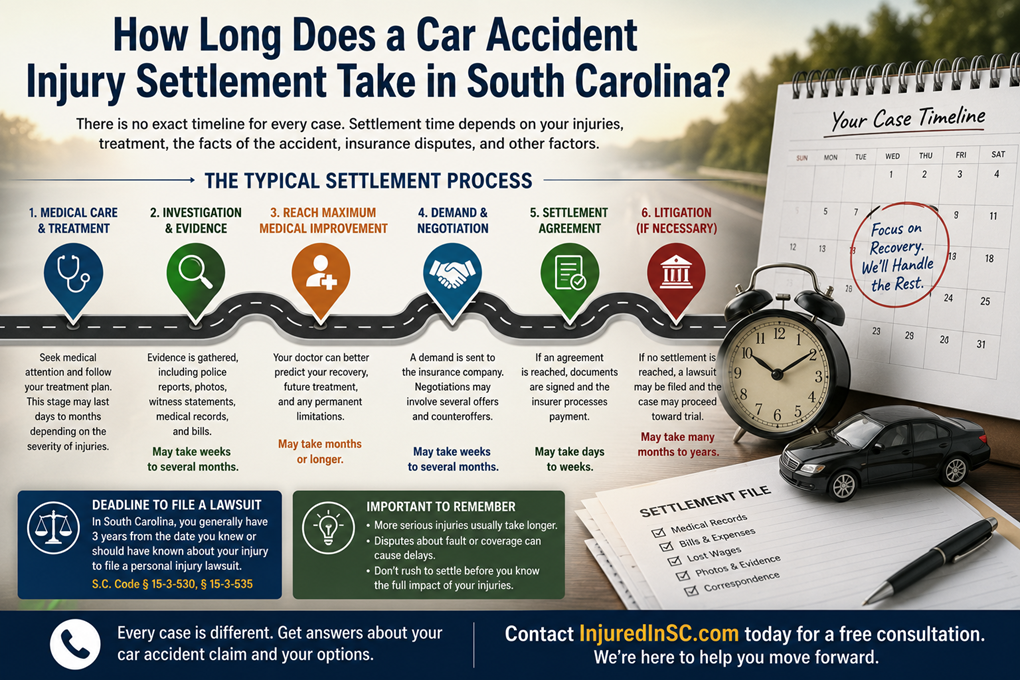
After a crash, it is natural to wonder when the injury claim will be resolved.
Medical bills may be arriving, missed work may be reducing your income, and the insurance company may be asking for records or statements.
There is no standard car accident settlement timeline in South Carolina that applies to every claim.
A relatively straightforward case involving clear fault, completed treatment, and adequate insurance coverage may resolve sooner than a claim involving serious injuries, disputed responsibility, multiple insurers, or a lawsuit.
The goal should not simply be to settle as quickly as possible. It should be to resolve the claim after enough information is available to evaluate your injuries, financial losses, and likely future needs.
What Is the Typical Car Accident Settlement Process?
Although every case is different, most claims move through several general stages.
1. Medical Evaluation and Treatment
Your health should come first. Seek medical attention promptly and follow the treatment plan recommended by your healthcare providers.
Trying to settle while treatment is still in its early stages can be risky. At that point, you may not know whether your symptoms will resolve, whether you will need additional testing, or whether your doctor will recommend therapy, injections, surgery, or long-term restrictions.
Some symptoms do not become noticeable immediately. The firm’s article about delayed car accident injury symptoms in South Carolina explains why pain and other problems may appear hours or days after a collision.
A claim involving a short period of treatment may reach the evaluation stage relatively quickly. A claim involving a fracture, concussion, spinal injury, surgery, or chronic pain may take longer because the medical outlook is less certain.
2. Investigation and Evidence Collection
The next stage involves gathering information about how the accident happened and what losses resulted.
Relevant evidence may include:
- The collision report
- Photographs and video
- Witness statements
- Vehicle repair records
- Medical records and bills
- Employment and wage records
- Insurance policy information
- Documentation of daily limitations
Fault may be clear in some collisions. In others, the drivers, witnesses, or insurance companies may disagree about speed, traffic signals, lane position, or each person’s actions.
Obtaining medical records can also take time, particularly when treatment involves several hospitals, physicians, therapists, or diagnostic facilities. Bills may arrive separately from the corresponding medical records.
Review what to do after a South Carolina car accident for additional guidance about preserving photographs, witness details, reports, and insurance information.
3. Reaching a Reasonably Clear Medical Outlook
Many claims are evaluated after the injured person has completed treatment or reached a point at which the future medical outlook is reasonably clear. This is sometimes described as maximum medical improvement, although the exact medical terminology may vary.
Reaching this stage does not necessarily mean that the person has fully recovered. It may mean the treating provider can offer a more informed opinion about:
- Continuing symptoms
- Permanent limitations
- Future treatment
- Work restrictions
- The likelihood of additional improvement
Waiting for a clearer prognosis can lengthen the claim, but it may reduce the risk of accepting a settlement that does not account for future medical care or long-term limitations.
What Happens After Treatment Is Documented?
Once sufficient records are available, a demand may be presented to the responsible insurer. The demand typically explains the collision, liability evidence, injuries, treatment, expenses, lost income, and other claimed losses.
The insurer then reviews the information. It may request additional records, investigate earlier medical conditions, interview its insured, or dispute whether certain treatment was caused by the accident.
An initial offer may not reflect the injured person’s complete losses. Negotiation may involve several exchanges before the parties agree or determine that settlement is unlikely.
There is no dependable settlement calculator or universal average. Injury severity, medical expenses, lost income, available coverage, fault evidence, and the effect on daily life all matter. The firm’s discussion of South Carolina personal injury settlement factors provides additional context.
What Factors Can Delay a Settlement?
Several issues can extend a car accident settlement timeline in South Carolina.
Serious or Continuing Injuries
A claim may take longer when the person is still receiving treatment or when the need for future care is uncertain. Settling too early may leave the injured person responsible for later expenses.
Disputed Fault
When each driver blames the other, additional investigation may be needed. Video, witnesses, physical evidence, vehicle data, and testimony may become important.
Preexisting Medical Conditions
An insurer may argue that neck, back, joint, or neurological symptoms existed before the crash. Earlier and current medical records may need to be compared to determine whether the collision caused a new injury or aggravated an existing condition.
Multiple Injured People or Insurance Policies
Claims may become more complicated when several people are injured, more than one driver may be responsible, or uninsured or underinsured motorist coverage is involved.
Policy limits can also affect negotiations when the total losses exceed the available liability coverage.
Medical Liens and Reimbursement Claims
Health insurers, government benefit programs, or medical providers may assert a right to reimbursement from settlement proceeds. These claims often must be identified, confirmed, and resolved before the final funds can be distributed.
The guide to who pays medical bills after a South Carolina car accident explains how health insurance, Medical Payments coverage, liability insurance, and reimbursement rights may interact.
What If the Claim Does Not Settle?
When the parties cannot agree, the injured person may decide to file a lawsuit. Filing does not prevent a later settlement. Many cases continue to be negotiated while litigation proceeds.
A lawsuit may involve written discovery, sworn testimony, medical examinations, motions, mediation, and preparation for trial. Court schedules, the number of parties, disputes over evidence, and the complexity of the injuries can all affect how long the process takes.
A settlement may occur before suit is filed, during discovery, at mediation, shortly before trial, or even during trial. No one can promise that a particular case will settle within a specific period.
How Long Do You Have to File a South Carolina Injury Lawsuit?
South Carolina Code Section 15-3-530 generally establishes a three-year limitations period for an action involving injury to a person. Section 15-3-535 states that the action must generally be commenced within three years after the person knew, or through reasonable diligence should have known, that a cause of action existed.
This deadline is different from the time it takes to negotiate an insurance settlement. Negotiations do not necessarily stop the statute of limitations from running.
Different requirements may apply when the accident involves a government vehicle, public employee, minor, wrongful death, or another special circumstance.
Evidence may also disappear long before the filing deadline, so it is generally unwise to delay investigating the claim.
Should You Accept an Early Settlement Offer?
An early offer may provide faster access to money, but speed can come with a cost. Before signing a release, consider whether you understand:
- Your diagnosis and prognosis
- The treatment you may need in the future
- Your unpaid medical balances
- Your lost income and work restrictions
- Available insurance coverage
- Any liens or reimbursement obligations
Once a release is signed, the injury claim generally cannot be reopened because symptoms worsened or additional treatment became necessary.
Discuss Your South Carolina Settlement Timeline
The length of a claim depends on medical recovery, the quality of the evidence, insurance coverage, disputed issues, and whether litigation becomes necessary. A faster resolution is not always a better resolution, particularly when the long-term effect of an injury is still unknown.
For questions about the car accident settlement timeline in South Carolina, contact a car accident lawyer in South Carolina to discuss the accident, the status of your treatment, and the legal options that may apply.
This article provides general legal information and is not legal advice. Every claim has its own facts, evidence, deadlines, and insurance issues. No settlement amount or completion date is guaranteed.
Ready To Take Action?
It won’t cost you anything to speak with an attorney about your case.